How Solvraze Handles Payments So You Don't Have To
Understanding how money flows from your customer's checkout to your pocket — and why Solvraze's centralized payment model protects both merchants and buyers.
May 15, 2026
One of the most common questions from new merchants is: "How do I receive payments?" Setting up a merchant account with a payment gateway, going through KYC verification, and integrating APIs is a significant technical and administrative hurdle — especially for small business owners in Pakistan.
On Solvraze, you never have to deal with any of that.
How It Works
When a customer completes checkout on your store, payment is collected securely by the Solvraze platform through our integrated payment gateway. The gateway supports major credit and debit cards as well as popular Pakistani payment methods.
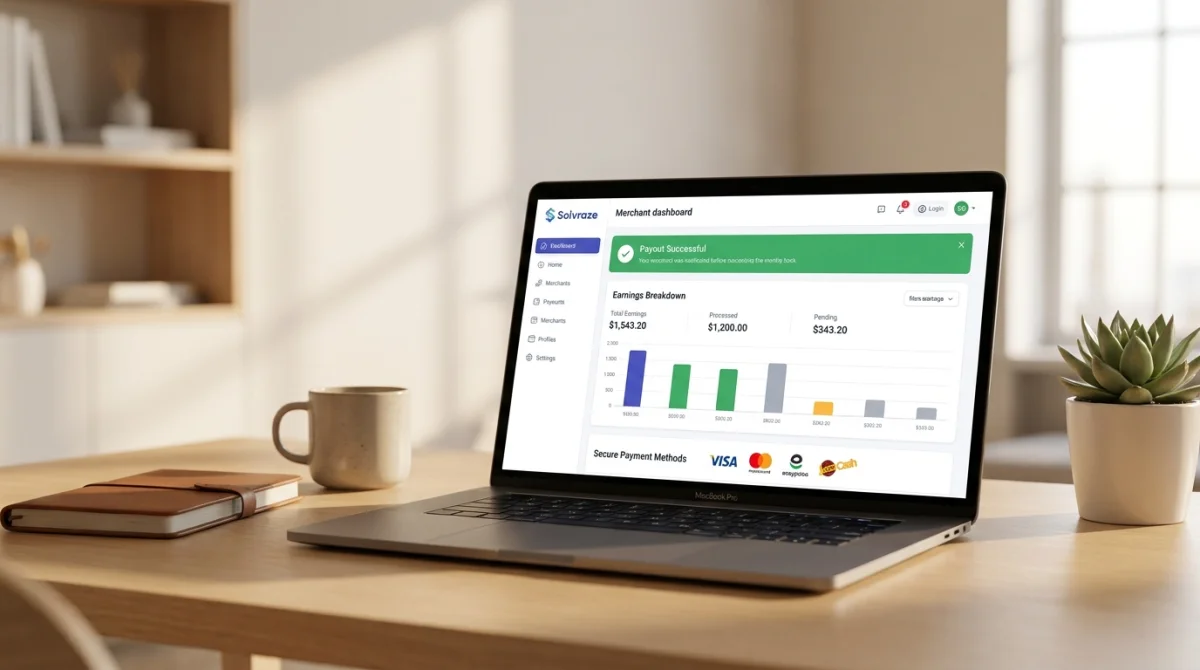
Once the order is confirmed, Solvraze automatically calculates your net earnings: the order total minus our small commission. That amount is recorded as a pending payout in your merchant dashboard.
Getting Paid
Our admin team reviews and disburses payouts on a regular cycle via bank transfer or our platform payout system. You can track every pending and completed payout — along with a full breakdown of commissions — directly from your dashboard. No spreadsheets required.
Full Transparency
Every order shows: customer payment received → commission deducted → your net earnings. Nothing is hidden. If you ever have a question about a specific payout, our support team is available to walk you through it.
Secure for Your Customers Too
Payment data is handled by a PCI-DSS compliant gateway and is never stored on Solvraze servers. Customers shop with confidence knowing their card information is protected.
What Merchants Should Check Before Accepting Orders
Confirm that your business details, payout information, product prices, delivery charges, and refund or return expectations are accurate before sending traffic to the store. A payment can succeed while an order still needs manual fulfillment, so make sure your team knows where to find the order, customer contact details, and payment status.
For COD, remember that a placed order is not the same as a confirmed order. Use the customer confirmation workflow before committing courier costs. For online payments, reconcile the successful payment against the order total and keep a simple record of the payout or billing state. These habits make support easier and prevent confusion when order volume grows.
Questions to Ask About Ecommerce Payments
When is an online payment considered successful?
When is commission recorded for a COD order?
Where can the merchant see net earnings and payout status?
What should the customer do if payment succeeds but the order confirmation is unclear?
Which payment method should be offered for high-value or customized products?
These details belong in your operating checklist and, where relevant, on your customer-facing FAQ. Learn more about the Pakistan ecommerce platform workflow and the merchant FAQ before you publish a payment-heavy campaign.
Payment Questions Customers Ask
Customers want to know which methods are available, whether the total includes delivery, when an order is considered confirmed, and what happens if they change their mind. Put those answers near the checkout or in a visible FAQ. Plain language is more useful than a list of gateway names that a first-time buyer may not recognize.
Merchants should also explain expected delivery timing and the contact method for payment questions. If a customer sees a successful payment but does not understand the next step, quick support can prevent duplicate orders and unnecessary disputes. Keep the order reference available so your team can find the transaction without asking the customer to repeat every detail.
Use Payment Data to Improve Decisions
Compare COD and online-payment orders by average value, confirmation rate, delivery outcome, and return reason. The comparison can show where an online-payment incentive is useful, which products need stronger verification, and whether a checkout message is causing confusion. Treat payment data as an operating signal, not only a finance report.
Keep a Reconciliation Routine
Set aside a regular time to compare successful orders, cancelled orders, COD confirmations, commission entries, refunds, and payouts. Use the same order reference in your internal notes and customer conversations. A repeatable routine makes it easier to spot a duplicate payment, a missing status update, or a customer who needs a clear explanation.
As the business grows, separate product profitability from payment convenience. A product can have strong demand but weak margin after delivery, returns, packaging, and platform costs. Reviewing the complete order picture helps you decide which products to promote, which payment methods to emphasize, and which questions need better content on the store.
We handle the payments complexity so you can focus on sourcing great products and growing your store.